
A day before US President Donald Trump's additional 25 per cent tariff kicks in, Prime Minister Narendra Modi on Tuesday made a vehement pitch for swadeshi and Make in India that should help create jobs in the country.

China promised to address three key concerns of India, the sources said.

Why is Shailesh Chandra, managing director of Tata Motors Passenger Vehicles and Tata Passenger Electric Mobility, not worried about the competition?
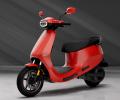
Ola Electric on Friday said it has launched eight scooter models under the S1 brand, developed on its Gen 3 platform, priced between Rs 79,999 and Rs 1,69,999. The company said it will continue to sell retail its Gen 2 scooters along with the latest Gen 3 S1 scooters.

Budget 2025 lays down a transformational roadmap for India's digital and economic future, focusing on AI-driven enterprise modernisation, workforce skilling, and sustainable innovation. With bold investments in AI, digital infrastructure, and ease of doing business, the government has set the stage for businesses to scale, innovate and compete on a global level.

Almost all of these companies either unveiled their new electric vehicle or alternative energy-powered models.

Asserting that India has full potential to emerge as a global hub for electric vehicles by 2025, Union Minister Nitin Gadkari on Friday asked automobile manufacturers to reduce cost and forego profit initially to capture market and fuel growth. Once the market picks up there will not be any looking back, Road Transport and Highways and MSMEs Minister Gadkari said, promising all support to manufacturers in the initiative aimed at cutting India's huge import costs of crude and arresting pollution. The minister said he is scheduled to make an hour-long presentation on EVs before the Chief Justice of India post-Diwali.

Tata Motors on Wednesday expanded its electric vehicle range in the country with the launch of Nexon EV MAX, priced between Rs 17.74-19.24 lakh (ex-showroom). Equipped with a 40.5 kWh lithium-ion battery pack, the Nexon EV Max offers 33 per cent higher battery capacity than the Nexon EV, delivering ARAI certified range of 437 km (under standard testing conditions), ensuring uninterrupted inter-city travel. ARAI refers to Automotive Research Association of India. The model produces 105 kW (143 PS) of power and delivers a torque of 250 Nm, resulting in 0 to 100 sprint times in under 9 seconds.
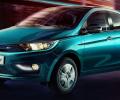
Tata Motors on Wednesday unveiled Tigor EV, its second electric model in the personal mobility space after Nexon EV. The auto major has tasted success with Nexon EV, which currently commands about 70 per cent market share in the domestic electric vehicle segment. The Tigor EV comes powered by the company's high voltage electric architecture - Ziptron - and has been developed based on three pillars of technology, comfort and safety.

Only a few thousand chargers dot the Indian landscape, some in working condition, others not, with some held hostage to the power supply vagaries of local utilities, reports S Dinakar.

Tata Motors on Tuesday launched its second electric vehicle -- Tigor EV, catering to the personal segment in the domestic market, priced between Rs 11.99 lakh and Rs 13.14 lakh (ex-showroom). The model comes in three variants, priced at Rs 11.99 lakh, Rs 12.49 lakh and Rs 12.99 lakh. A dual tone top-end trim is tagged at Rs 13.14 lakh. The auto major has already achieved success with its first electric model, Nexon EV and now commences deliveries of Tigor EV from around 150 sales outlets in 70 cities across the country.

SoftBank Group-backed Ola Electric is in talks with multiple global suppliers to build a battery cell manufacturing plant in India with a capacity of up to 50-gigawatt hours, sources said. As part of its broader electrification push, the firm plans to invest in companies with advanced cell and battery technology, alongside the 50 Gwh battery plant. Ola Electric needs 40 Gwh of battery capacity to power 10 million electric scooters annually. The remainder will be for its electric cars, which the company plans to manufacture in the future.

In a boost to the electric vehicle boom in India, Taiwanese major Hon Hai Technology Group (aka Foxconn) is likely to set up an EV manufacturing unit in India through its subsidiary Foxtron. Amid speculation that the company may look at Tamil Nadu and probably the Ford India unit near Chennai for its new facility, sources indicate that the group was already betting big in the electric vehicle component space in India through Bharat FIH, which is already having a tie up with companies like Ola Electric and Ather. Bharat FIH currently has two manufacturing units in Tamil Nadu's Sriperumbudur that manufactures phones like Apple iPhones and Xiaomi phones.

Earlier in May, Ford India announced that it had dropped its plans to make electric vehicles (EVs) in India, which it intended to export, under the production-linked incentive scheme (PLI). Ford was among 20 companies that had signed a Champion OEM Incentive Scheme under the PLI project with the government in February this year. The decision comes as a blow for the 4,000-odd employees at Ford India's Maraimalai Nagar plant near Chennai and in Sanand, Gujarat. In September last year, the company had announced that it would exit the India market, which it had entered in 1995 through an on-again, off-again joint venture with Mahindra & Mahindra (they split in 1998, signed a JV in 2019 and split again in December 2020), retailing petrol and diesel brands such as the EcoSport, Figo, Aspire, and Endeavour.

Recently, Suzuki Motor Corp (SMC) in an investor presentation expressed strong intent to enter the electric vehicle (EV) space. This is part of a larger strategy the Hamamatsu-based firm has drawn up in developing electrification of technologies as it seeks to achieve carbon neutrality. The significance of this presentation is that it marked the first time that the Japanese carmaker spelt out its EV strategy with well-defined timelines. SMC plans to develop electrification technologies by 2025, fully implement them in products from the same year, and make a full-scale quantitative increase from 2030.

'The startup ecosystem, the government, and the owners of large pools of Indian capital need to actively support the creation of these local champions, not pull down the teams that are trying hard to get there.'

The all-new ZS EV will be available in two variants -- Excite and Exclusive, priced at Rs 21.99 lakh and Rs 25.88 lakh, respectively. The company said it has initiated bookings for the Exclusive variant, while bookings for the Excite trim will commence from July 2022. The model comes with the largest in-segment 50.3-kWh (kilowatt-hour) battery with advanced technology, offering a 461-km certified range in a single charge.
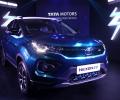
Powered by Ziptron technology, the electric SUV for the personal segment comes with a range of 312 km on a single charge and a high voltage system, fast charging capability, extended battery life and class leading safety features. Besides, it has 35 connected car features as well. The Nexon EV will be available in three trim levels across 60 authorised dealerships in 22 cities, the company said at the launch.

India's electric mobility goal, which has so far been riding on two wheels, is all set to graduate to four wheels. At least, the journey has begun. Hyundai Motor India said it would invest Rs 4,000 crore till 2028 to launch half-a-dozen electric vehicles (EVs) in India. It would eventually straddle premium and mass segments. The first of these - the electrified version of an internal combustion engine (ICE)-powered model - will go on sale as early as next year.

While the electric version will open for bookings starting August 12, the internal combustion engine (ICE) counterparts will make their debut after September 2, says Rajesh Karkera/Rediff.com.

Tata Passenger Electric Mobility (TPEM), a subsidiary of Tata Motors, on Friday announced that it has commenced production at its second factory in Sanand, Gujarat, which it had acquired from Ford India last year. This new facility will unlock an additional manufacturing capacity of 300,000 units per annum, which is scalable to 420,000 units. The new facility is spread over 460 acres and is adjacent to Tata Motors' existing passenger vehicle facility in Sanand.

'At present, hybrids emit lesser carbon despite using fuel than pure play electric cars.' 'That is because EVs have to be charged and 76 per cent of the country's electricity is still coal-based and not renewables.'

Railways is testing waters for locomotives to run on lithium-ion batteries, the most common ones used in electric vehicles.

Ola Electric will roll out its complete offering of electric scooters and motorcycles in each segment of the market - premium, mass premium, and economical - in the next 12 months in a bid to push for a near-full conversion of the two-wheeler market to electric in three years. According to Bhavish Aggarwal, founder and CEO of Ola Electric, "ICE (internal combustion engine) products will fall off a cliff." He also says the company is aiming to become profitable next year.

India's traditional companies are now moving full scale into the renewable and alternative energy space that had been dominated by smaller players over the past decade. Companies such as government-owned NTPC and the Adani and the Tata groups restructured their businesses well in time to become major players in the green space. At the same time, other conventional companies, such as Larsen & Toubro and Reliance Industries Ltd (RIL), which have a presence both in the energy sector as well as myriad other activities - construction, technology and retailing - are tying up with new-age companies to hitch a ride to a greener path.

'If you align your ambition with India's rise, the peak of your careers will unfold alongside the peak of India's power.'
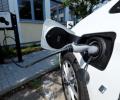
Electric vehicle market is likely to attract investments of Rs 94,000 crore over the next five years and is expected to generate business opportunities in the real estate sector, according to a joint report by Colliers India and Indospace. The report 'Electric Mobility in Full Gear' mentioned that the electric vehicle (EV) industry in India is currently at a nascent stage but it is likely to grow, backed by government initiatives and a move towards recognising climate change. "India is taking a step towards sustainability and has vowed to cut its carbon emissions. "At the recently concluded CoP26 summit, India pledged to reach net-zero carbon emissions by 2070. "In India, the transport sector is currently the third-largest emitter of CO2. This is leading to increased thrust on EVs in India," it said.

Nearly a decade ago, the first fully electric vehicle (EV) caught fire on the road in the US. It was a model from Tesla, the world's most admired EV maker. A metal fragment punctured the underbelly of the vehicle, penetrating its battery pack, leading to a fire. Indian lawmakers and automakers have had nine years to study the incident (in fact, three Tesla Model Ss caught fire in two months in 2013) but seem to have learnt little.

The company will showcase the Ioniq electric vehicle at the Auto Expo that begins next week.

While home-grown firms like Tata and Mahindra have been actively participating in the government's e-mobility mission, by launching electrified versions of their existing models, the global firms believe electric is not the best solution for a country where the primary source of power generation is coal, and where infrastructure is a big impediment.

'I have personally been very keen on investing in lithium ion battery technology for some time.'

Auto manufacturers have focused on launching CNG variants of their popular models to meet consumer demand for vehicles with lower running costs.

'That way you're not hostage just to US sort of exports to India.'

India's planned transition to electric vehicles will drastically affect the commodities market, says Aditya Gandhi

The aim is to replace nearly 40 per cent of its existing last mile fleet of delivery vans with EVs by March 2020. o start with, the company is looking at deploying nearly 160 e-vans by the end of 2019.

India's e-commerce market alone is projected to reach $200 billion by 2026, making it a prime industry for ambitious entrepreneurs, explains rediffGURU Harsh Bharwani.
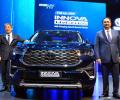
Hybrids have helped Maruti acquire leadership in SUVs, a segment that was never its forte. Toyota has also risen with the hybrid tide to clock its highest-ever annual sales in 2023.

On a surprise visit to Beijing amid speculation that he may unveil Tesla's autonomous driving technology in the burgeoning electric vehicle (EV) market in China, billionaire Elon Musk on Sunday met Chinese Premier Li Qiang and discussed future expansion plans for his automobile.
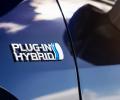
Plug-in hybrids have two engines and the electric part has a much larger battery than in the regular hybrids. Car companies, led by the Japanese, are pushing the Indian government to look at hybrids in the interim if it wants to reduce carbon emission.

It's a bird, it's a plane, it's the new electric SUVs from Mahindra! Rajesh Karkera and Hitesh Harisinghani/Rediff.com describe the futuristic BE 6e and XEV 9e.
